


In manufacturing, time is money, but how that time is measured can dramatically influence how well a facility runs. One of the most widely used metrics for quantifying labor efficiency and capacity is the Standard Hour. When used correctly, it offers a powerful way to evaluate productivity, plan capacity, and support continuous improvement.
But what exactly is a standard hour? And how is it different from simply counting the number of units produced?
A standard hour (SH) is a unit of measure that represents the amount of work that should be completed in one hour under normal operating conditions. It is typically derived from time studies or predetermined time standards and reflects the expected time to produce one unit (or perform one task), multiplied by the number of units actually produced.
In other words:
Standard Hours = Standard Time per Unit × Actual Quantity Produced
Example:
If the standard time to assemble one unit is 20 minutes (or 0.33 hours), and a worker produces 15 units in a shift:
Standard Hours Earned = 15 × 0.33 = 4.95 hours
This figure allows us to evaluate performance, compare labor productivity, and better understand how time is being spent.
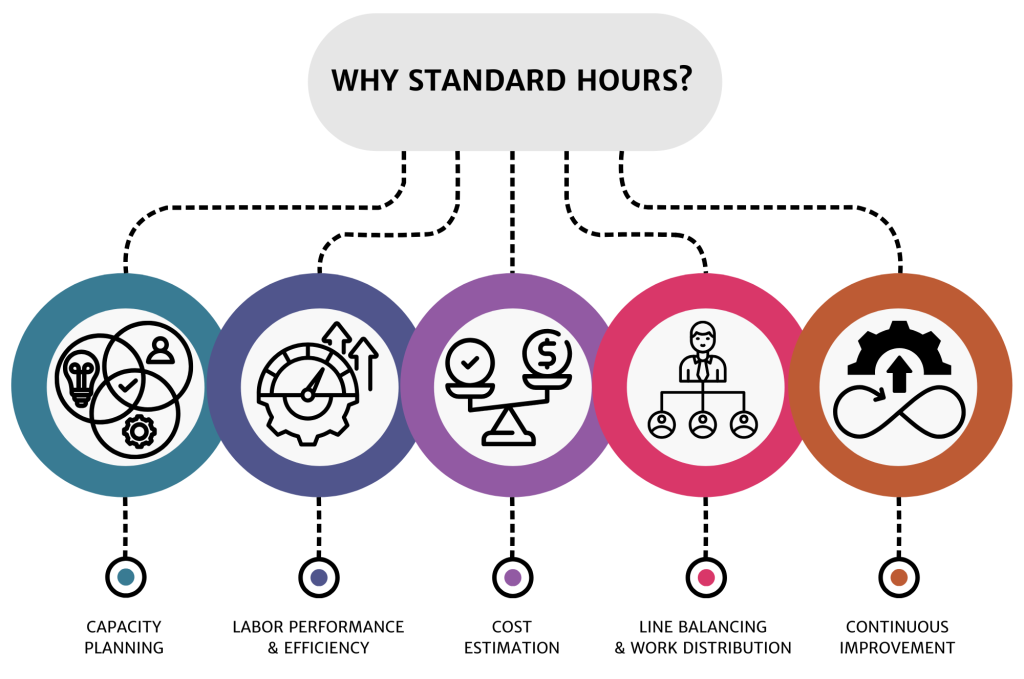
Standard hours are more than a performance metric. They influence nearly every aspect of operations:

Understanding how many standard hours are available and how many are required helps balance labor, machines, and output with demand.

Comparing standard hours earned vs. hours paid provides a quantitative measure of labor productivity.

Accurate standard hours enable better labor cost forecasting and quoting for new business.

Standard hours help ensure that tasks are evenly distributed across an assembly line, reducing bottlenecks and idle time.

By tracking standard hour trends, manufacturers can pinpoint inefficiencies, underperforming processes, or training needs.
It’s important to distinguish between:
The ratio of these two gives you Labor Efficiency: Labor Efficiency (%) = (Standard Hours / Actual Hours) × 100
For example: If a team worked 8 hours and earned 6 standard hours, efficiency is 75%. If they earned 9 standard hours in that same shift, they are at 112.5% efficiency.
Standard hour tracking is common in:
They also form the foundation for performance-based incentive programs, budgeting models, and capacity models in industrial engineering.
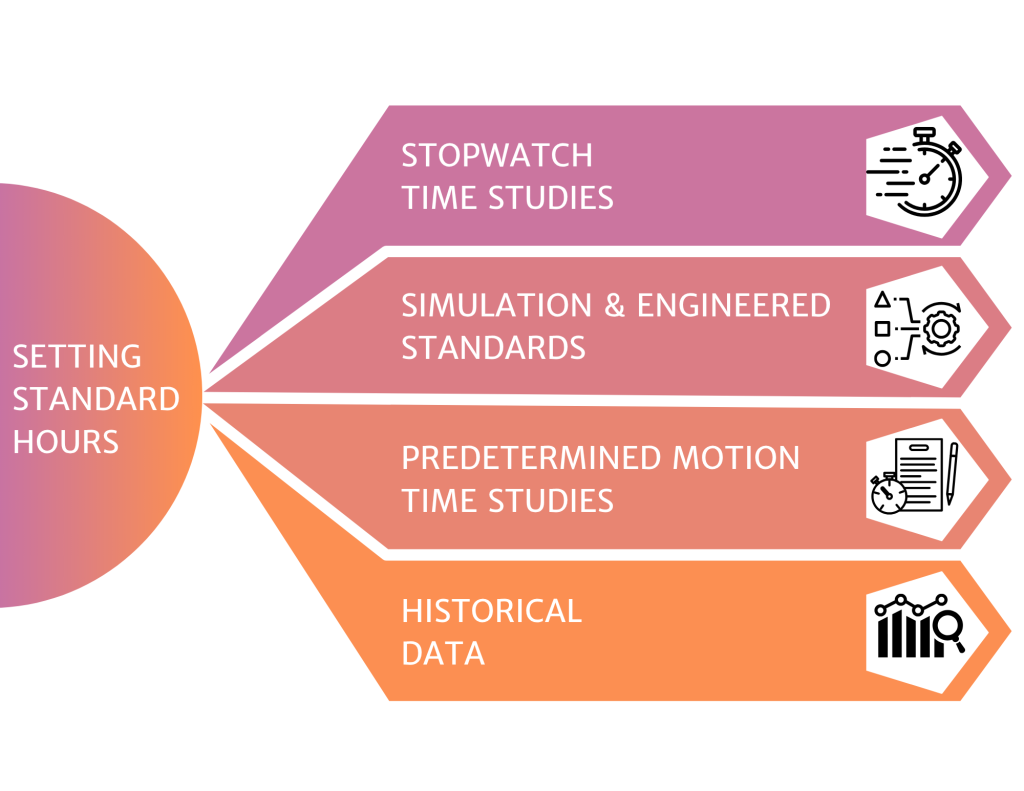
Standard hours should be based on realistic expectations. Some methods include:
Standard hours aren’t about measuring people – they’re about understanding processes. When thoughtfully developed and properly used, they bring clarity to production planning, performance management, and continuous improvement.
They allow manufacturers to shift from “How many units did we make?” to “How effectively did we use our time?” – a far more powerful question for building efficient, agile operations.
At IMEG, our industrial engineers specialize in time studies, standard data development, and performance measurement frameworks tailored to your facility. Whether you're launching a new line or benchmarking existing operations, we can help you set realistic, accurate standard hours that drive better decisions.
Contact Us