

If a Process Flow Diagram (PFD) shows you how your process works and a Control Plan tells you how to control it, a PFMEA helps you understand how that process can fail and what you can do about it before failure happens.
PFMEA, or Process Failure Mode and Effects Analysis, is one of the most powerful tools in any manufacturer’s quality toolbox. It’s not just about preventing defects, it’s about proactively identifying risk, prioritizing response, and building a process that performs reliably from day one.
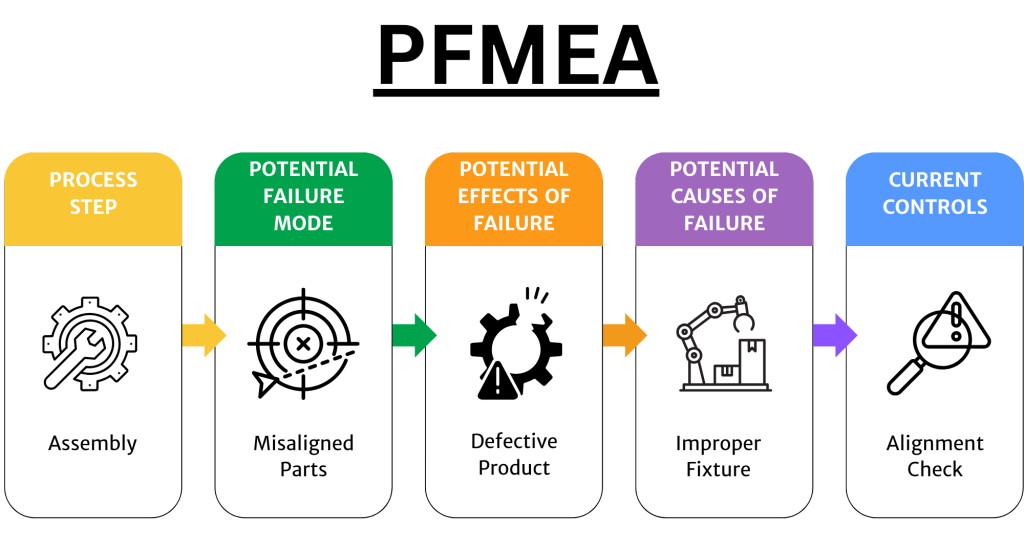
A PFMEA is a structured analysis that asks a simple but critical question: “What could go wrong at each step of this process?”
The tool helps you:
The end result? A clear roadmap to mitigate your biggest risks before they create defects, delays, or rework.
In complex production environments, it’s easy to focus on what’s working, but without a PFMEA, you’re often blind to what might go wrong. PFMEAs provide:
A PFMEA is typically developed in a tabular format and includes the following columns:
Matches the operations listed in the Process Flow Diagram
What could go wrong? (e.g., missing weld, short shot, cross-threaded screw)
What happens if this failure occurs? (e.g., part doesn’t function, safety risk)
What might cause the failure? (e.g., worn tool, operator error, incorrect setting)
How is the process currently monitored or prevented?
Assess and rate 1-10: seriousness of the effect on the customer (Severity); likelihood of the failure occurring (Occurrence); how likely current controls are to detect the issue before it reaches the customer (Detection)
Risk Priority Number = Severity × Occurrence × Detection, used to rank risks
What can we do to reduce risk? (e.g., poke-yoke, process audit, design change)
PFMEAs are most powerful when updated over time with each revision building on lessons learned from production, audits, or customer feedback.
To ensure consistency and traceability across quality documentation, each process step in the PFMEA should include a reference to the corresponding Work Instruction step number. This creates a direct connection between:
This linkage ensures that any identified risks in the PFMEA are directly addressed in operator guidance and control documentation, closing the loop between analysis and execution.
While PFMEAs are typically developed during the APQP phase, they are equally valuable outside of formal product launches. Ideal times to perform or update a PFMEA include:
Before scaling a new process or automation
After a major process change (equipment, layout, materials)
When adding or changing inspection controls
In response to recurring quality escapes or customer complaints
During cost reduction initiatives or continuous improvement projects
PFMEAs are one of the most misused and misunderstood quality tools. Common pitfalls include:
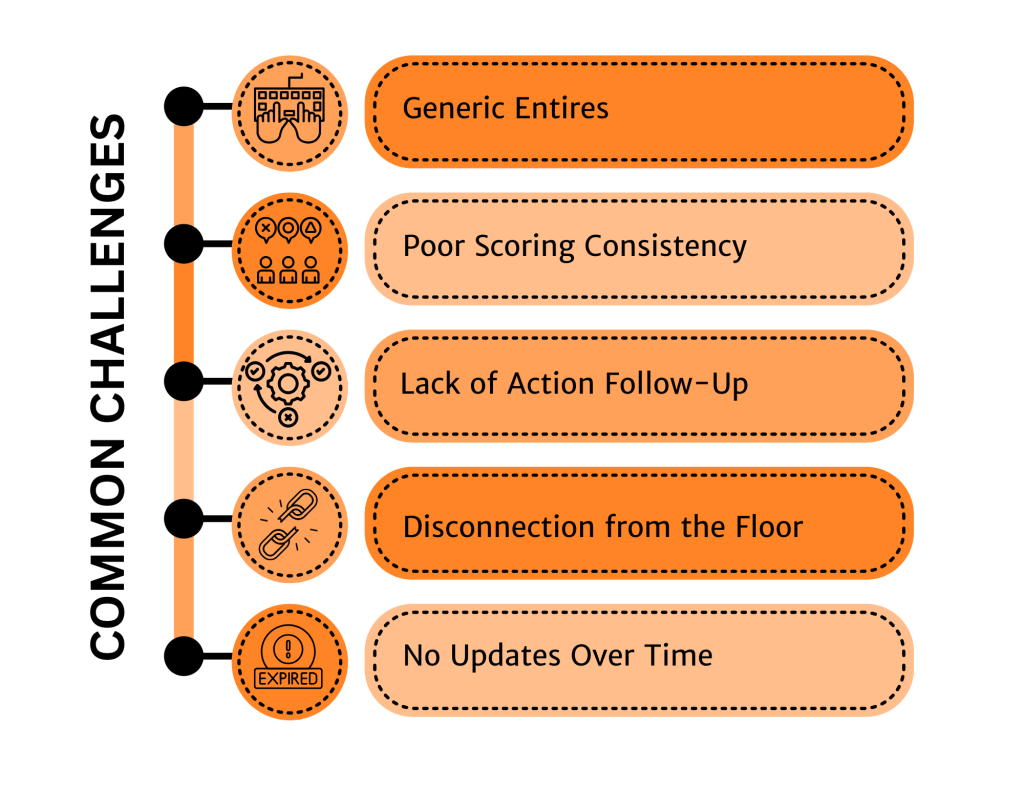
How to overcome these challenges:
Done right, a PFMEA provides immense operational value:
A PFMEA isn’t just paperwork, it’s a map of your process’s weak points, and a guide to fix them before they fail. When combined with a strong Process Flow Diagram and Control Plan, it creates a closed-loop system for identifying, controlling, and continuously improving process quality. To help you get started or streamline your analysis, we’ve developed a PFMEA Template that provides a clear, structured format for capturing failure modes, assessing risk, and prioritizing improvements.
At IMEG, we help manufacturers create PFMEAs that are practical, accurate, and directly tied to floor operations. Whether you're preparing for a PPAP or launching a new product, we can help you prioritize the right risks and take meaningful action.
Reach out today to learn how we can support your quality planning process.
Contact Us