

Work-in-Process (WIP) refers to semi-finished goods that are still undergoing transformation on the shop floor. These parts or assemblies have started the production process but haven’t yet become finished products.
From stamped metal blanks between press operations to subassemblies waiting for final inspection, WIP is everywhere in a manufacturing facility. And while it’s necessary to keep things moving, it’s also one of the biggest culprits of inefficiency when not managed well.
You’ve probably seen it before, carts overflowing with product waiting in corners, operators unsure of what to pick next, or production cells buried under weeks’ worth of inventory.
Too much WIP clogs space, hides problems, increases lead time, and ties up working capital. Too little WIP, on the other hand, causes starvation at downstream processes and creates idle time.
Often, manufacturers believe they have a space problem but the root issue is excessive WIP. A floor crowded with untracked or unmanaged in-process inventory can create the illusion of insufficient space, when in reality, optimized flow and footprint planning can reclaim thousands of square feet.
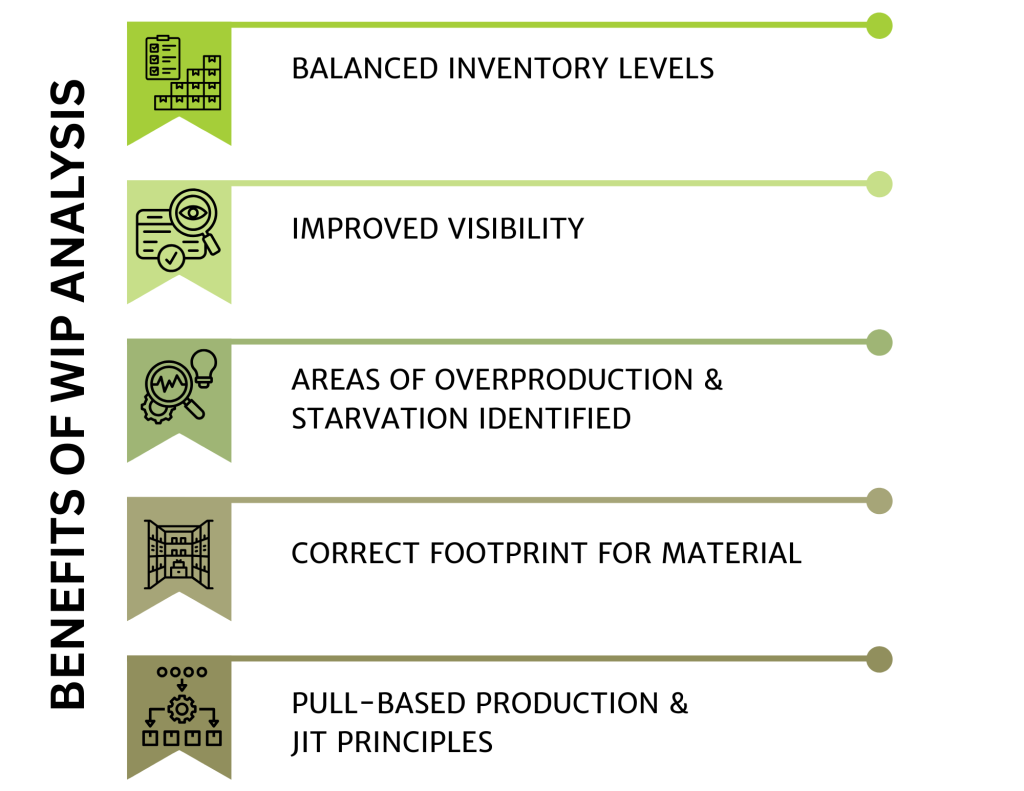
WIP analysis is the process of studying how much in-process inventory a line or plant truly needs to function optimally, no more, no less.
It helps manufacturers:
A WIP market is a designated area where in-process materials are stored and managed between process steps. Think of it as an organized supermarket, not a dumping ground.
These spaces are purposefully designed and maintained to:
A well-designed WIP market turns inventory from chaos into control, helping operators see what to build, when to build it, and where to send it next.
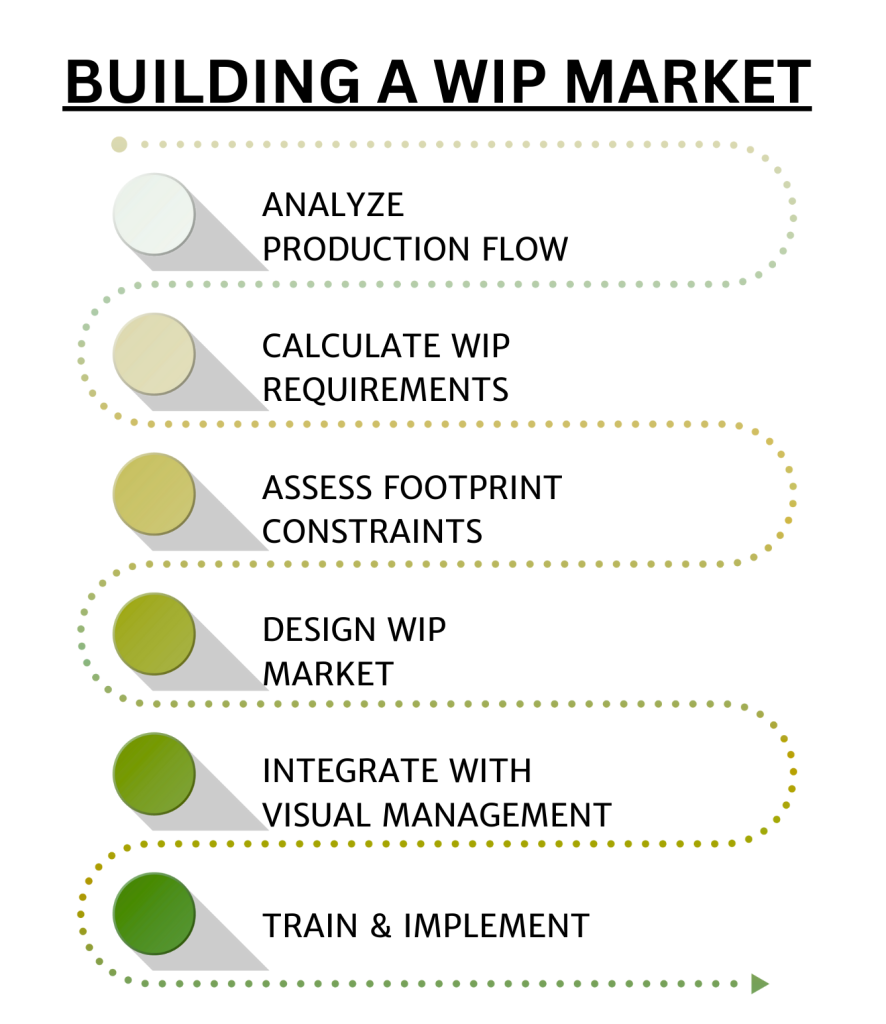
Building an effective WIP market starts with analysis, not shelving. Here’s how IMEG typically approaches it:
When built correctly, WIP markets bring measurable improvements to shop floor performance:
✔ Increased visibility of production status
✔ Faster detection of flow interruptions or bottlenecks
✔ Reduced space usage and clearer aisles
✔ Fewer material handling errors and delays
✔ More stable scheduling and fewer surprises
✔ Reduced lead times and better customer responsiveness
They also serve as a foundation for advanced practices like pull systems, heijunka leveling, or mixed-model assembly lines.
At IMEG, we’ve helped manufacturers across various sectors identify the optimal WIP needed to support their flow, often reducing in-process inventory by 30-60% and freeing up thousands of square feet of floor space in the process.
By calculating the “right” WIP levels and building physical WIP markets to match, we’ve seen firsthand how better material control drives better outcomes.
WIP isn’t inherently bad, it’s necessary to keep production running. But without structure and intent, it can quickly spiral into clutter, confusion, and cost.
Through careful WIP analysis and market design, manufacturers can reclaim control, improve responsiveness, and support Lean, efficient operations.
IMEG’s industrial engineering consultants can help you right-size your WIP levels and design efficient WIP markets tailored to your process and space.
Contact us today to schedule a consultation or learn more about our material flow and inventory optimization services.
Contact Us