Lead time assumptions can cause real issues in scheduling, costing, and quoting, eventually hurting customer satisfaction and profitability. I have observed many manufacturers relying on outdated or estimated lead times, but actual lead time data often tells a different story. So how can you accurately determine your true lead times through the machine shop?
The Answer: Break It Down Into 4 Steps
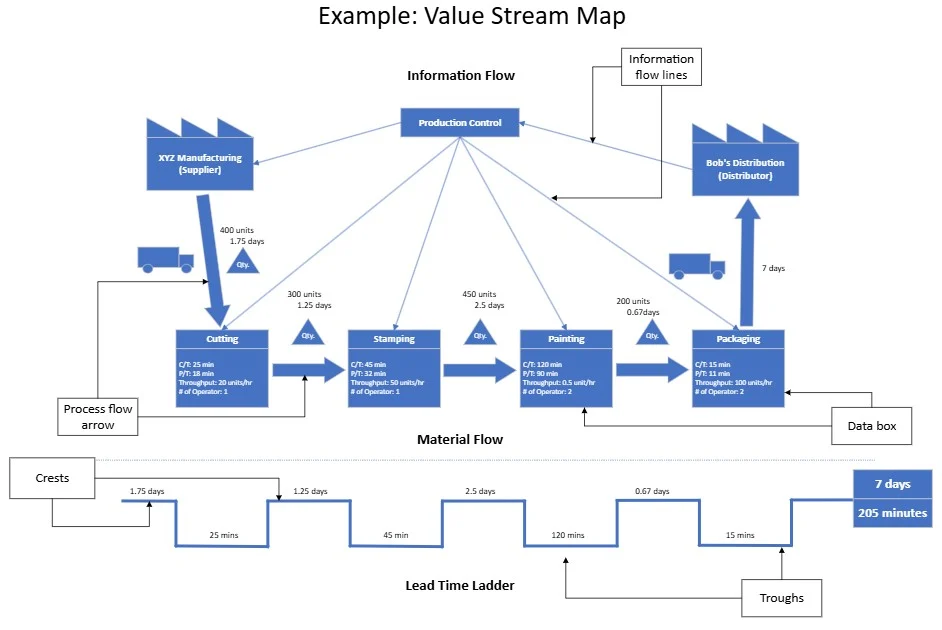
1. Map the Flow of Workpieces using Value Stream Mapping
Begin by charting how a typical part moves through your machine shop or assembly process. This includes every step – material receiving, storage, delivery to workstation, setup routines, machining, inspection, staging, packaging, and shipping. A Value Stream Map (VSM) provides a visual overview of the current state, showing both value-added and non-value-added activities.
2. Collect Timestamps or Conduct Time Studies
Gather data from your ERP system, traveler cards, or manually if needed. But for greater accuracy and insight, consider conducting Time Studies. These can verify actual run times, setup durations, and downtime, giving you objective data on process performance.
3. Analyze Actual Dwell Times and Queues
Use the data to calculate how long jobs spend at each operation vs. how long they wait between operations. Time Studies help isolate true process time, while the VSM highlights delays and bottlenecks across the entire system.
4. Compare Actual to Assumed Lead Times
Match your findings against what you’re quoting or planning for. It’s not uncommon to discover your internal estimates are off by 25–50% or more, particularly when excessive queue and rework times are hiding in plain sight.
IMEG Tip:
For most manufacturers, only about 15–20% of total lead time is value-added. The rest is queueing, waiting, or rework. IMEG uses Value Stream Mapping and Time Studies to uncover and quantify these inefficiencies that set the stage for smart and targeted improvement activities aiming to reduce overall lead times.
Understanding your actual lead times is key to improving throughput, reducing WIP, and meeting delivery commitments.
IMEG can help by conducting Time Studies and facilitating Value Stream Mapping sessions to give you clarity and control over your operations.