

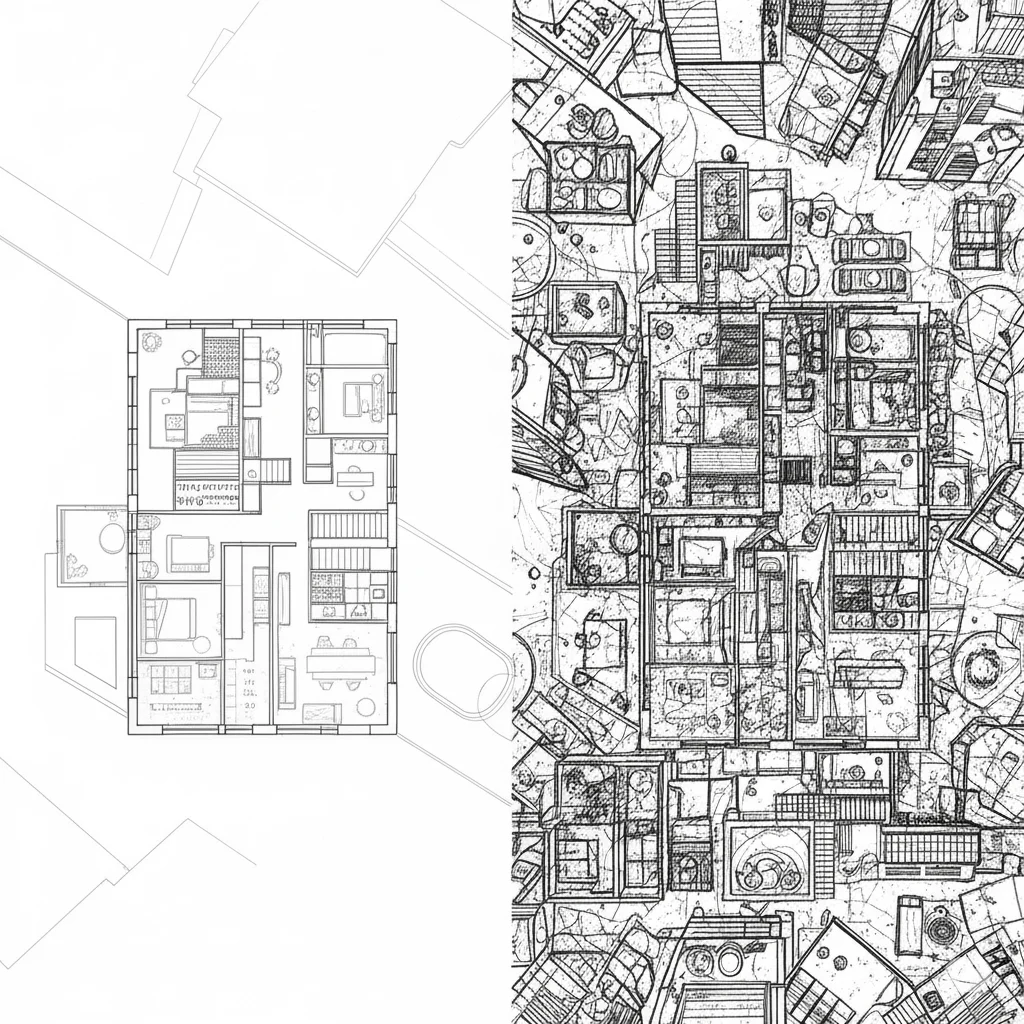

Bringing Order to Complexity: The Power of AutoCAD Layering Standards

layer management in AutoCAD

If you’ve ever opened a facility layout file from someone else — even a colleague within your own organization — you’ve probably felt that moment of confusion.

“What am I looking at? Why are the workstations floating in midair? Is that line a wall, a conveyor, or an electrical line? And where’s the material flow?”

We’ve seen it all: dozens of overlapping layers, inconsistent naming, missing references, and drawings that feel more like puzzles than engineering tools. And that’s just within a single team. Now imagine sharing that drawing across departments, vendors, or facilities.

At IMEG, we take a different approach. Every layout drawing we create or revise — whether it’s from scratch or adapted from a customer file — follows a rigorous AutoCAD layering standard we’ve developed in-house. It’s not just about being neat. It’s about making every drawing readable, editable, and immediately actionable — for everyone involved.

The Problem with Disorganized AutoCAD Drawings

In many facilities, layout drawings evolve over years. They’re patched, reworked, merged, and duplicated — often by different people using different conventions. The result?

  • Layers with vague or generic names
  • Electrical lines on the same layer as racking or HVAC
  • No way to isolate material flow or power drops
  • Files that crash because every object is visible at once

This lack of structure makes even basic layout analysis time-consuming. Updates become risky. Sharing with third parties becomes stressful. And any opportunity for simulation or process visualization is nearly impossible without hours of cleanup.

facility layout organization

How We Structure Our AutoCAD Drawings

To avoid these issues, we use a standardized layering system across all of our facility layout drawings. This includes:

Clear, logically named layers that reflect their purpose — no guessing what each one controls

Color coding and line type consistency for visual clarity

Hierarchical layering that supports filtering by system type or function

Prebuilt template files that we use as a starting point for all new layouts
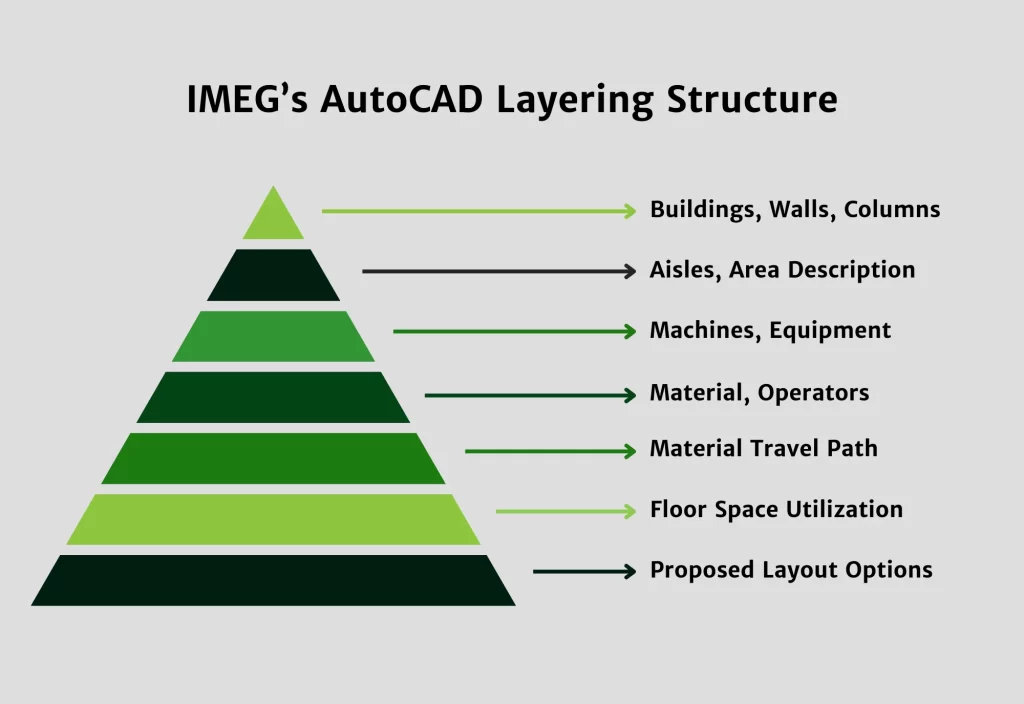

We apply this structure whether we’re designing a new facility from scratch or modifying an existing customer-provided layout. If we inherit a drawing that’s unstructured, we rebuild it. We do this not just for our own clarity — but because we know that everyone down the line will benefit.

Why This Matters

Standardized AutoCAD layering might sound like a behind-the-scenes detail. But its impact is massive:

  • Drawings are instantly readable by customers, vendors, and teammates
  • Users can toggle layers on/off to focus on electrical, equipment, or material flow
  • Edits can be made without risking hidden or misaligned elements
  • Drawings are simulation-ready and easy to integrate into downstream tools
  • New engineers or managers can quickly onboard to layout files without tribal knowledge

Most importantly, it means our customers aren’t left wondering what they’re looking at. When they open a file from IMEG, they see exactly what they expect.

A Professional Touch That Sets Us Apart

Layout drawings are more than lines and blocks — they’re a visual language for communicating complex operational plans.

When a drawing looks messy, stakeholders lose trust. When it’s clear, professional, and thoughtfully layered, it builds confidence. It also makes meetings, reviews, and approvals move faster — because everyone can see the logic behind the layout.

We’ve had clients say, “This is the first time I’ve actually understood my own facility layout.” That’s the kind of impact we strive for.

layer management in AutoCAD

Final Thoughts

Facility layouts are foundational to so many decisions — from process flow to safety planning to capital investment. The drawings behind those decisions must be just as strong.

At IMEG, our AutoCAD layering structure brings clarity, control, and professionalism to every facility layout we touch. Whether we’re designing a line from scratch or helping a customer untangle an inherited drawing, our goal is always the same: to bring order to complexity — and confidence to every stakeholder.

How can IMEG help?

Contact us to bring structure and clarity to your facility designs.

Contact Us

Devam

Industrial Engineer