
In manufacturing, every second and every step counts. While many companies focus on high-tech automation or sophisticated scheduling to boost productivity, one of the most overlooked sources of wasted time and cost is excessive travel distance on the shop floor.
Travel distance refers to the physical movement of people, materials, or equipment during production. Long, unnecessary trips between workstations, storage areas, or assembly lines add up quickly – costing time, increasing labor fatigue, and inflating operating costs.
By understanding and reducing travel distance, manufacturers can unlock hidden capacity, reduce waste, and make daily operations smoother and safer.
Travel distance analysis is a method used to measure, evaluate, and reduce the distance that people, materials, or products travel within a manufacturing facility. It’s a key component of lean manufacturing and industrial engineering, aimed at eliminating wasteful movement that doesn’t add value to the final product.
At its core, travel distance analysis answers questions like:
The goal is to identify inefficiencies hidden in the layout or workflows and redesign them for smoother, faster production. By mapping actual paths, often using tools like spaghetti diagrams or digital layout software, manufacturers gain clear, actionable insight into how to reorganize work areas, relocate storage, or redesign process flow to minimize unnecessary travel.
Excessive travel distances often sneak into a facility’s operations over time, especially as product lines grow or new processes are added without revisiting the layout. Some common culprits include:
When left unchecked, these issues silently eat away at productivity, increase labor costs, and even pose safety risks due to unnecessary foot traffic or forklift congestion.
To truly understand and manage travel distance, it helps to measure and monitor a few key indicators:
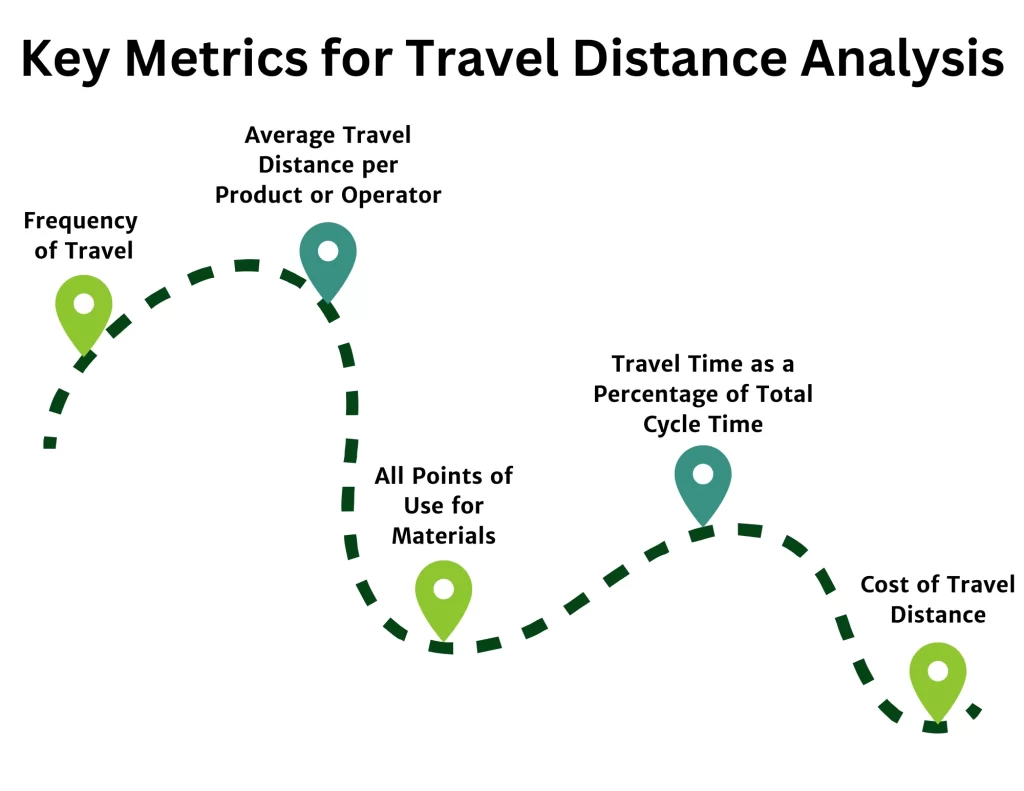
Keeping an eye on these metrics makes it easier to justify layout changes and to demonstrate real ROI from travel distance improvements.
A travel distance analysis doesn’t have to be overly complicated, but below are some tips and tools we utilize as best practices:
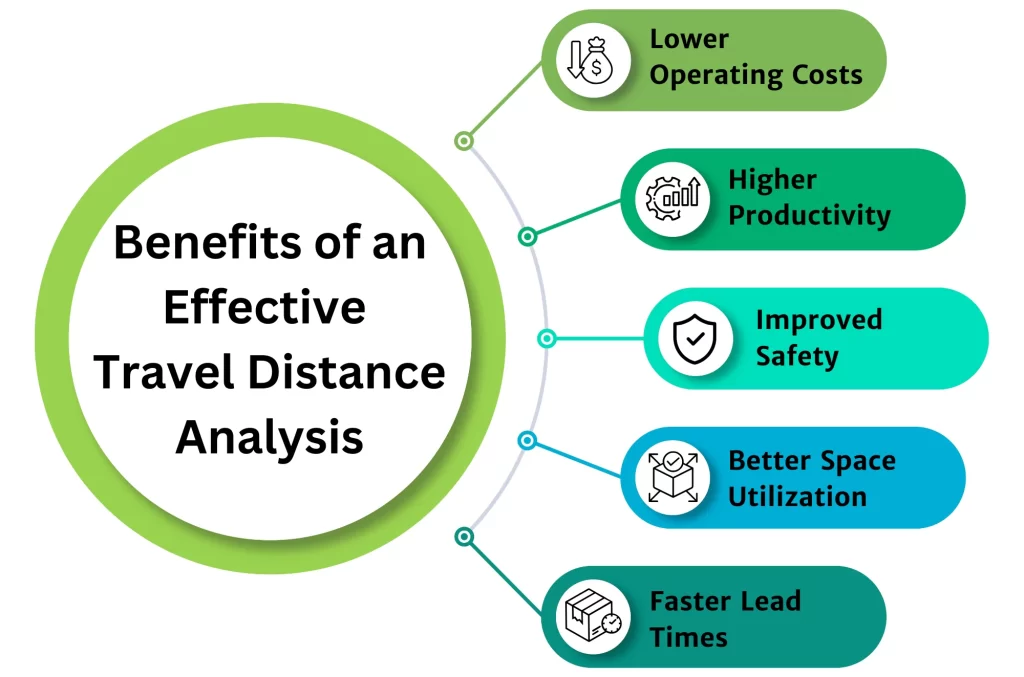
When manufacturers take the time to analyze and optimize travel distances, the benefits go well beyond just saving a few steps. Here’s what you can expect:
In short, travel distance analysis is a simple yet powerful way to uncover hidden inefficiencies and drive measurable improvements across your entire operation.
Once you’ve identified excessive travel distances, the next step is putting practical solutions in place. Here are proven strategies manufacturers use to shorten travel and streamline movement:
Rearrange workstations and equipment into a configuration that supports smooth continuous flow. This can be done at the plant level and at the individual work cell level.
Store frequently used materials and tools near where they are used and needed, instead of in a centralized area. This reduces the need for operators to leave their work stations to search for items.
Clearly mark pathways and aisles for both people and material handing equipment. Also consider unidirectional flow for main aisleways and storage areas. This minimizes cross-traffic and helps avoid congestion.
Consider adding conveyors, tuggers, AGVs, or carts to move materials with less manual effort and a consistent, direct path.
Unnecessary movement is one of the most overlooked, but easily fixable, forms of waste in manufacturing. By analyzing how people and materials move through your facility, you can spot hidden time sinks, design smarter layouts, and unlock new levels of productivity without major capital investment.
Whether you’re aiming to cut costs, increase output, or improve safety, travel distance analysis is a practical first step toward a leaner, more efficient operation.
Identifying and reducing unnecessary travel distance is one of the fastest ways to improve your material flow and boost productivity - but knowing where to start can be challenging.
Let our team help. We specialize in analyzing travel distance, optimizing layouts, and designing material flow solutions tailored to your unique operations.
Contact us today to schedule a consultation and discover how much time, space, and cost you could save.
Contact Us